Direkt zum Hauptbereich

Asu no Taiyo / Tomorrow's Sun (Nagisa Oshima, Japan 1959)


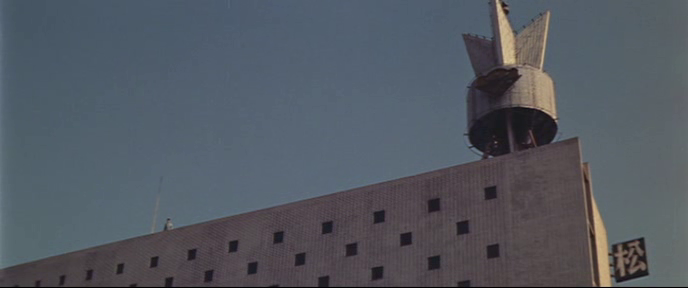
TOMORROW'S SUN ist eine Rarität: ein früher Kurzfilm Oshimas, der im Stil eines Trailers gemacht ist. Freilich zu einem Film, der nicht existiert. Man sieht ein junges Mädchen, das sich in einen Jungen verliebt und auf einer Theaterbühne allerhand spannende Gefahren überstehen muss, um ihren Angebeteten zu bekommen. Das ist alles recht klamaukig, voller toller visueller Einfälle, ein Revue-Film mit Gangstern im Frack und mit Kanonen und Tanz und Gesang - allerdings konnte ich keine Untertitel auftreiben, und es wird recht viel gesprochen, erzählt, erläutert und von einem engagierten Mädchenchor vorgetragen. Beinahe wähnt man sich in einem Film von Yasuzo Masumura. Hier ein paar Screenshots, die ein wenig den Plot illustrieren und die fantastische gestalterische Bildkraft Oshimas verdeutlicht:



Zwei Jahre vor diesem Film entstand Masumuras KUCHIZUKE / KISSES (1957), der immer wieder gerne (vereinfacht) zum Auftakt der Japanischen Nouvelle Vague erklärt wird, ein Film in dem sich eine Liebesgeschichte zwischen zwei Jugendlichen Bahn bricht, die ihren Ausdruck in wilden Fahrten auf dem Motorrad findet. Hier das Äquivalent dazu (bei Oshima sitzt allerdings die Frau vorne - was keine generelle Kritik an Masumuras Frauenrollen sein soll; gerade dessen Protagonistinnen sind später meist sehr starke, kämpfende Frauen):


Oshima schneidet lustigerweise dann direkt auf eine identische Fahrt auf dem Fahrrad - wer weiß, ob das ein ironischer Kommentar sein könnte?). Und am Ende kehren wir mit einem Rahmen zum Anfangsbild zurück. Winke winke!

Beliebte Posts aus diesem Blog

Abschied

Micha hat diesen Blog fast 15 Jahre mit großer Leidenschaft geführt. Seine Liebe zum asiatischen Kino hat ihn in dieser Zeit in Kontakt mit ganz unterschiedlichen Menschen gebracht. Viele von euch waren ihm, wenn auch nicht räumlich, so doch gedanklich und emotional sehr nah. Jetzt ist er am 30.12.2021 zuhause in Bonn gestorben. Ich habe mich entschlossen, Michas Schneeland-Blog auch in Zukunft nicht offline zu stellen. So können Interessierte weiterhin all die klugen, detailgenauen und begeisternden Gedanken zum asiatischen Kino nachlesen, die er über die Jahre festgehalten hat.  Neben seinem Blog hatte Micha 2021 noch ein neues Projekt aufgenommen: Gemeinsam mit der Videokünstlerin Sandra Ehlen und Thomas Laufersweiler von SchönerDenken hatte er begonnen, in einem Podcast das filmische Werk von Keisuke Kinoshita zu besprechen. 25 Beiträge sind so bis zu Michas Tod im Dezember noch entstanden. Alle zwei Wochen erscheint nun eine Folge dieser Kinoshita-Reihe. V ielleicht eine sc...

Aido: Slave of Love (Susumu Hani, Japan 1969)

Here are some pictures I took during a private screening of Susumu Hani's extremely rare and seldom seen feature film  AIDO - SLAVE OF LOVE , which is the movie Hani made after the famous NANAMI: INFERNO OF FIRST LOVE. The film is beautifully shot, completely absorbing and structurally abandoning all narrative consensus - it is somehow - for most of the time - a subjective trip into the mind of the protagonist Shusei (Kenzo Kawarasaki). As you can asume, a dreamlike state predominates the film; and with its' devotion to extensively focussing on the details of the body while making love, presented in detailed close-ups, aswell as its' beautifully daring setpieces, it reminded me to some extent of Toshio Matsumoto's experimental oeuvre, as for example in his short film PHANTOM . AIDO was submitted to the competition-section of the 19th Berlin International Film Festival (aka Berlinale) - a fact that is quite astonishing, if you consider the direction the main section of ...

Sleep Has Her House (Scott Barley, GB 2016)

"And the dark is always hungry." (Scott Barley) Scott Barley's apocalyptical drone-room of a film is a fascinating experience. Not only a film to watch, but definitely one to listen to, as the audio is almost as impressive as its pictures. Very often, the images are blurred in the beginning, but with the slightest movements of the camera, the picture does get clearer, more concrete, focused, but sometimes nothing happens at all, too. Nevertheless, the film feels very dynamic - it's a weird state of an inherent Bildspannung , a suspense (and tension that might rip apart) inside of the images themselves that keeps you totally immersed.  Static movement  of the camera might be the term of technique to describe the process of capturing those dreamlike images, which are almost incomprehensive at first, always hard to grasp. As there seems to be no plot, no dialogue, no actors, there are none of the usual narrative anchors that guide us through a film, or movie. O...